

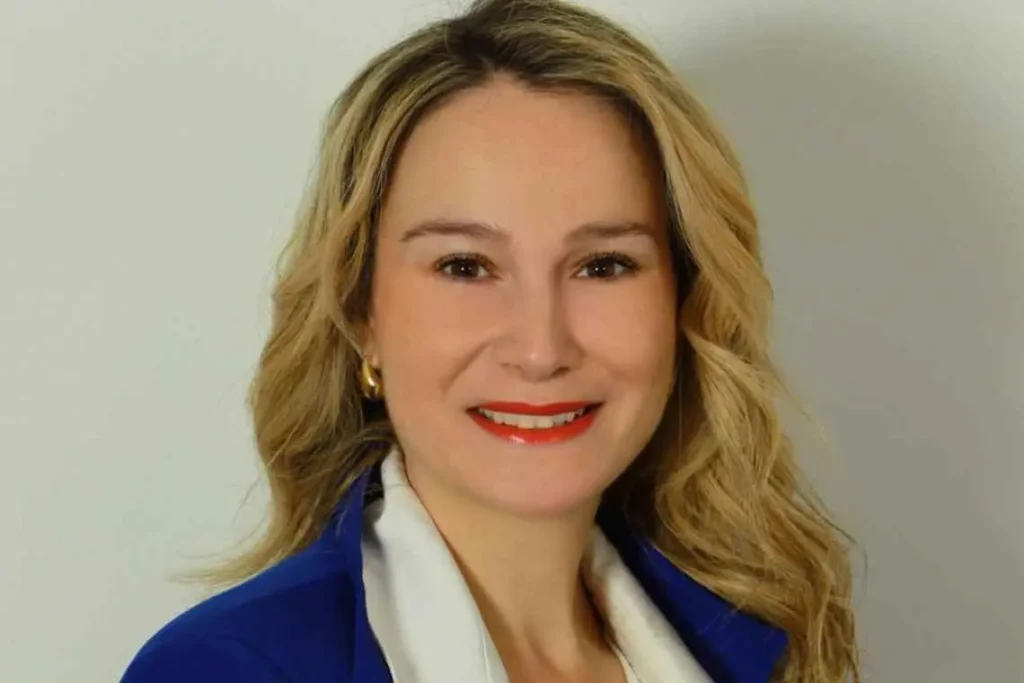
Fay Selimi, Co-Founder & Program Manager of Circular Gaia, participated in the RAWMATHUB.GR feature for International Women’s Day. Find the original interview text at the following link:
https://rawmathub.gr/epistimonika-kai-epixeirimatika-afieromata/oryktes-protes-yles-genous-thilykoy/oi-gynaikes-apodeiknyoun-kathimerina-tis-ikanotites-tous-ston-ergasiako-kai-koinoniko-stivo
Fai Selimi is a lawyer and Deputy Director of the Institute of Circular Economy and Climate at the European Public Law Organization (EPLO). She has never feared stepping out of her safety zone when it comes to changes in her professional career, particularly when she decided to expand her studies into economics and sustainable development. However, she believes that women must put in significantly more effort than their male colleagues when it comes to managerial positions.
Journalist : Tell us a little about your education and professional experience. What has been the greatest challenge in your career so far?
environmental law, energy law, European public law, and sustainable development. I am the Deputy Director of the Institute of Circular Economy and Climate at the European Public Law Organization (EPLO) and represent the organization in the Espoo Convention and the SEA Protocol of UNECE, which deal with transboundary environmental impacts.
From an early stage, I realized that being a freelancer comes with many challenges, and daily life can be highly demanding and stressful. Guided by my passion for my field and my instincts, I worked in different legal sectors to finally focus on what truly interests me.
I never feared stepping out of my safety zone when it came to career changes, particularly when I decided to expand my studies into economics and sustainable development. The process of designing sustainable practices—from research to implementation—truly excites me, as I understand its immense benefits for humanity and future generations.
As a lawyer in the beginning, I faced skepticism and had to work extremely hard to prove my worth. Law remains fundamental in this field, as all sustainable development and circular economy policies are grounded in legal frameworks. I believe that combining different scientific disciplines can be highly creative and beneficial. My persistence and relentless effort have ultimately paid off.
Journalist : What is your opinion on the position of women in modern society? Do you believe that the recent efforts to eliminate stereotypes, empower women in the workplace, and entrust them with positions of responsibility have truly created a framework of equal opportunities?
Fai Selimi: Significant progress has undoubtedly been made in recent years regarding the position of women, especially in Western societies. I believe that we, as women, have achieved this ourselves by proving our abilities and value daily in the workplace and society. Many more women now manage to advance professionally.
However, I still believe that we must work much harder than our male colleagues when it comes to managerial positions. Additionally, working women who are also wives and mothers still face numerous difficulties and daily challenges. More support and provisions are needed to help them balance their professional, family, and personal lives.
Nevertheless, I am optimistic that we are capable—each of us individually and all of us together—of further improving these conditions in the future. Through our achievements and by creating positive role models for the society we are a part of, we can make a difference. Historically, women have always fought battles for their rights and have never been granted anything without effort.
We, as women, have managed to prove our abilities and worth in the workplace and society on a daily basis.
Journalist : In recent years, businesses and society have shifted towards sustainability, circular economy, and environmental consciousness, driven by evolving legal frameworks. At the same time, more women are taking on leadership roles in these fields. How close do you think we are to achieving gender equality in this sector?
Fai Selimi: Sustainable development, especially through the circular economy—the new economic model promoted by the European Union—is now a reality. European policies and legislation, particularly through the Green Deal’s soft law framework, have played a decisive role in guiding businesses and society toward adopting sustainable practices.
I am particularly pleased that in my field, female representation is strong and significant across various levels—scientific, administrative, and within civil society. Women involved in the circular economy and sustainable development are stepping forward, gaining acceptance, making contributions, and recognizing the importance of their work for society and future generations. They are earning the respect of their colleagues.
I am particularly pleased that in my field, female representation is strong and significant across various sectors—scientific, administrative, and civil society.
Journalist : Work-life balance—what are the key “ingredients” that can help modern professional women achieve this goal?
Fai Selimi: Each person has their own “recipe for success,” and balancing professional and personal life is becoming increasingly difficult in today’s demanding society. Personally, I always keep in mind Aristotle’s theory of the golden mean from the Nicomachean Ethics—each of us must seek the ideal balance that works for us and avoid extremes.
No matter how overwhelming daily life can be, we must not neglect what truly matters to achieving our goals and happiness—ourselves. We should strive to work in fields we love, recognize our worth, claim quality time for ourselves, surround ourselves with people who support, love, and respect us, and demand what we deserve in both our personal and professional lives. All women deserve the best!
Each person has their own “recipe for success.” I always keep in mind Aristotle’s theory of the golden mean from the Nicomachean Ethics: Each of us must seek the ideal balance and avoid extremes.
Short Biography
Fai Selimi is a lawyer, a graduate of the Athens Law School specializing in environmental law, energy law, European public law, and sustainable development. She holds a Master’s degree from Harokopio University in economics and sustainable development and is a PhD candidate at Athens Law School, researching the legal interaction of environment and climate in achieving climate neutrality.
She has worked as a practicing lawyer and as a consultant for businesses, public and private sector entities, and international organizations on issues related to her field of expertise. She is the Deputy Director of the Institute of Circular Economy and Climate at the European Public Law Organization (EPLO) and represents the organization in the Espoo Convention and the SEA Protocol of UNECE, which focus on transboundary environmental impacts. Fai is also the Co-founder and Program Manager of the Circular Gaia Symposium (www.circulargaia.org).